
Vibe Coding Your MVP: Honest Tips From a Developer Who Cleans Up the Aftermath
Why the demo is not the product, and other things nobody tells you
 April 30, 2026 by Yuriy Frankiv · 5 min read
Over the last few months I've been to a handful of networking events and talked with startup founders who are excited about a new reality: you can vibe code an MVP without recruiting a team of expensive developers. The energy is real, and the productivity gains are real. But every one of these MVPs works fine until it doesn't, and "doesn't" can be devastating. Small bugs repel the early adopters who would have become your champions. Lost momentum is hard to get back.
I've spent close to thirty years writing software, and a lot of that time has been cleaning up systems that were fine until they weren't. Here is my honest take for non-technical solopreneurs using tools like Replit, Lovable, or Cursor to ship their first product.
Early adopters have more options than ever
The old wisdom said early adopters are forgiving. They are not, really. They are curious and willing to try something new, but loyal only as long as the friction stays low and the alternative is not one click away. With AI lowering the barrier to MVP creation, your category is more crowded than it was three years ago. A bug that would have been tolerable in 2018 is a churn event in 2026, because there are five other tools your user can try before lunch.
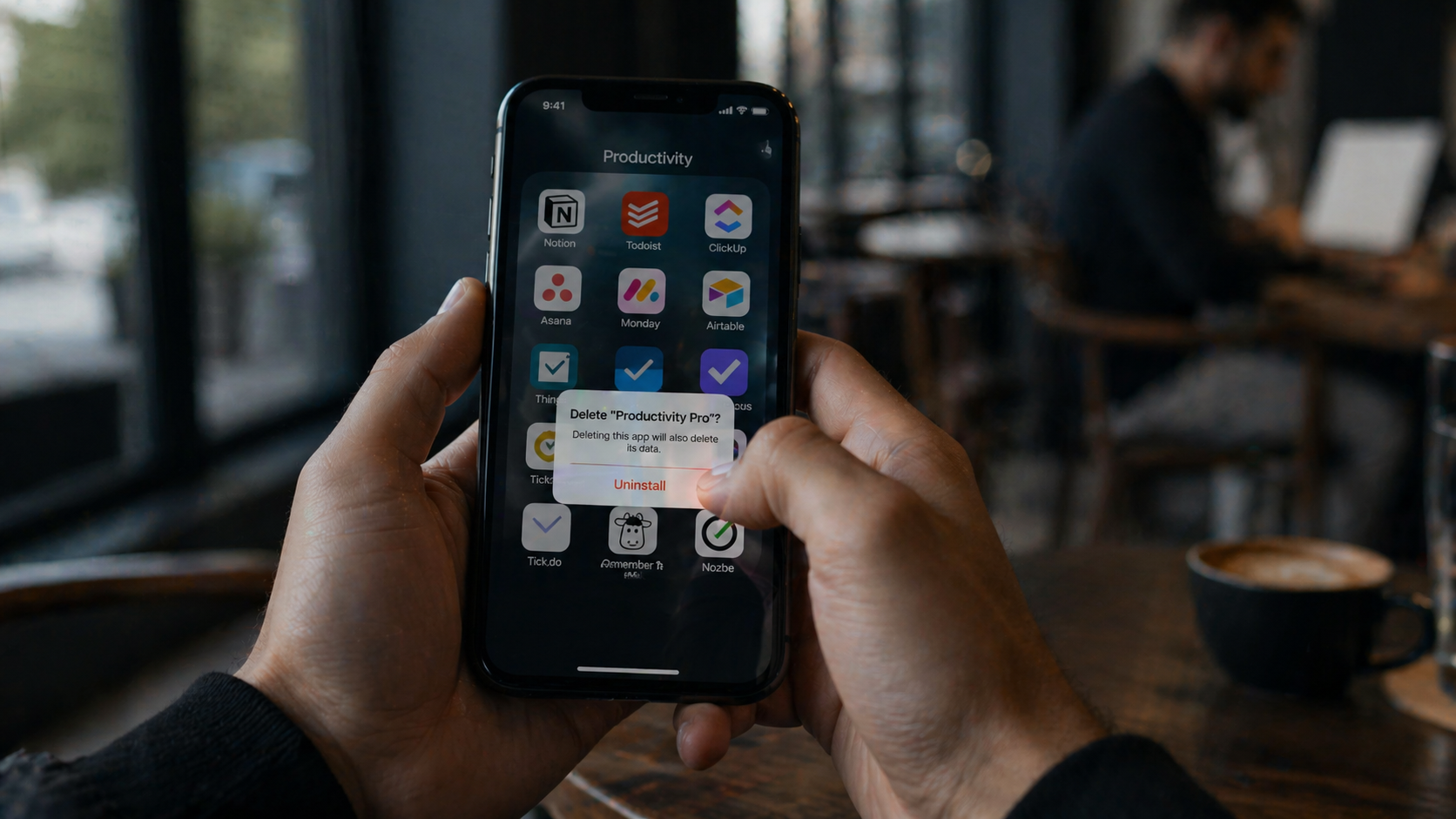
What this means in practice: a forgiving onboarding flow matters more than it used to. Every confused user is a user who quietly switches to a competitor without telling you why.
A vibe-coded MVP hides what is broken
The phrase "MVP is just an MVP" assumes you know what is underneath. That assumption breaks when the code was generated by an AI you did not supervise. The product looks polished. The screens render. Stripe processes payments. But the data model might be wrong in ways you cannot see, the auth flow might leak data, the database might lack indexes you will need at 1,000 users.

You can absolutely launch with a rough product. You cannot launch on a foundation you do not understand. Before you put it in front of paying customers, get someone technical to review what was built. Even two hours of a senior engineer's time will surface things you would otherwise discover under load, in production, with real customers watching.
Timebox the build, not the validation
This one I agree with completely, and I think it is the single most important tip on this list.
Most founders overbuild the product and underbuild the distribution. Set a hard deadline for shipping, then spend the rest of your hours on customer acquisition, conversations, and positioning. The MVP exists to enable those conversations. It is not the work itself.
A useful rule: if you spent more time this week building than talking to potential customers, something is off.
Speed is good. Speed without feedback is just heading in the wrong direction faster

The risk is not moving fast. The risk is moving fast with your eyes closed. You need feedback loops that tell you what is working: real conversations, basic analytics, error monitoring, a support inbox you actually read. Speed plus feedback compounds. Speed without feedback is debt accumulating off the balance sheet.
You miss the exit on the highway not because you are driving fast, but because you are not watching the signs. Build the signs first.
Five more things nobody warns you about
A few patterns I see consistently in vibe-coded products, that founders do not think about until it hurts:
Security debt is invisible until it isn't. AI-generated code commonly ships with leaky auth, hardcoded API keys in the client bundle, or input handling that any teenager with curl can exploit. Get a security review before you handle real customer data, especially anything regulated.
Cost runaway is a real failure mode. Inefficient queries, runaway API loops, and forgotten background jobs can turn a $20 MVP into a $4,000 cloud bill in a weekend. Set spending alerts on every service you use, on day one. Not week two.
Decide your trigger to bring in a human. Pick it now, in writing. Common triggers I use with clients: paying customers above a threshold, regulated data (finance, health, anything with PII), or domain complexity (multi-tenancy, scheduling, billing logic). At those points, the cost of getting a real engineer involved is much lower than the cost of not.
Document the thing you cannot read. Future you, or the engineer you hire in six months, needs to understand the system. Keep a SPEC document in the repo. Note major decisions. Write down what each integration does and why. The AI will not remember for you between sessions.
Have an exit hatch for your data. Before you have one customer, make sure you can export everything. If your stack locks you into a vendor's database or a proprietary format, you do not own your business. You are renting it.
The summary
Vibe coding gets you to a working demo faster than was possible three years ago. That is a real edge, and you should use it. The trap is mistaking the demo for the product.
Treat the MVP as a forcing function for getting customers. Ship it on a clock. Bring in technical eyes before you scale. Use the time you saved on building to build distribution instead.
The founders who win this cycle will not be the ones who shipped the most polished AI-generated app. They will be the ones who got to ten paying customers fastest, and knew enough to fix the foundations before the eleventh broke them.

Read Next
Why AI Can Make Software Development Cheaper, But Not by as Much as You Think
I built a CRM with AI assistance to measure how much more productive it actually makes me. The results were real but not what the hype suggests. Here's what I learned.
Read more...
The Weeks-Not-Months Problem: What Business Leaders Get Wrong About Modernizing Old Software
Most modernization projects stall because leadership and technology teams mean different things by 'modernize.' This article breaks down the gap between digital modernization and software modernization, and what actually makes the difference.
Read more...